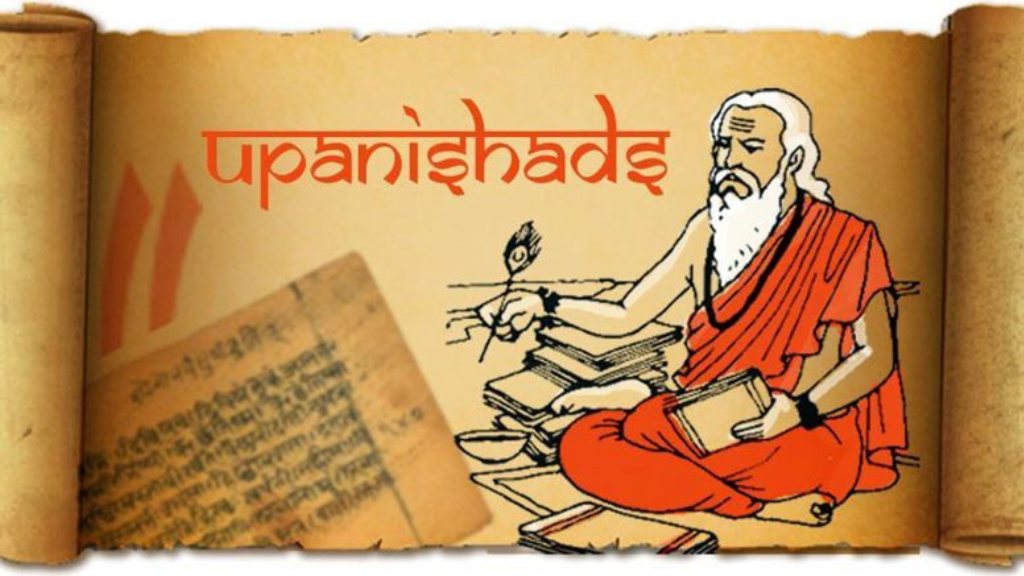
There is a profound and powerful hymn from the Ishavasya Upanishad:
ॐ पूर्णमदः पूर्णमिदं पूर्णात्पूर्णमुदच्यते ।
पूर्णस्य पूर्णमादाय पूर्णमेवावशिष्यते ॥
ॐ शान्तिः शान्तिः शान्तिः ॥
The translation of this mantra goes like: “That is the Whole, this is the Whole; from the Whole, the Whole arises; taking away the Whole from the Whole, the Whole remains.”
This mantra defines the supreme absolute and the manifested world’s reality. It reveals that true wisdom lies in realizing the ultimate fullness of all existence. I found multiple interpretations of this mantra; some relate it to the first law of thermodynamics, stating that energy cannot be created or destroyed, but only its form can be changed. Some compare it to the mathematical term infinity. Some emphasize the oneness and unity of the universe and beyond!
Whenever I chant this shloka at the end of my meditation session, I sense a feeling of fulfilment and completeness. I perceive this shloka as a messenger of a higher sense of gratitude. Ultimately, all we have is everything, the Whole, Purna! Realising that “This” – the world, yourself – is already complete helps shift the mindset from a place of lack to a place of abundance. The perceived “gains” or “losses” are part of an infinite reality but are eventually illusory; the underlying wholeness remains unchanged. This understanding eliminates the fear of loss or separation, as everything ultimately dissolves into the supreme wholeness.
The hymn concludes with the ultimate peace – the singular outcome derived from the Whole: Om Shanti Shanti Shanti.