moonlitmee.com

meeteelangalia@gmail.com

Gayatri Mantra & Surya

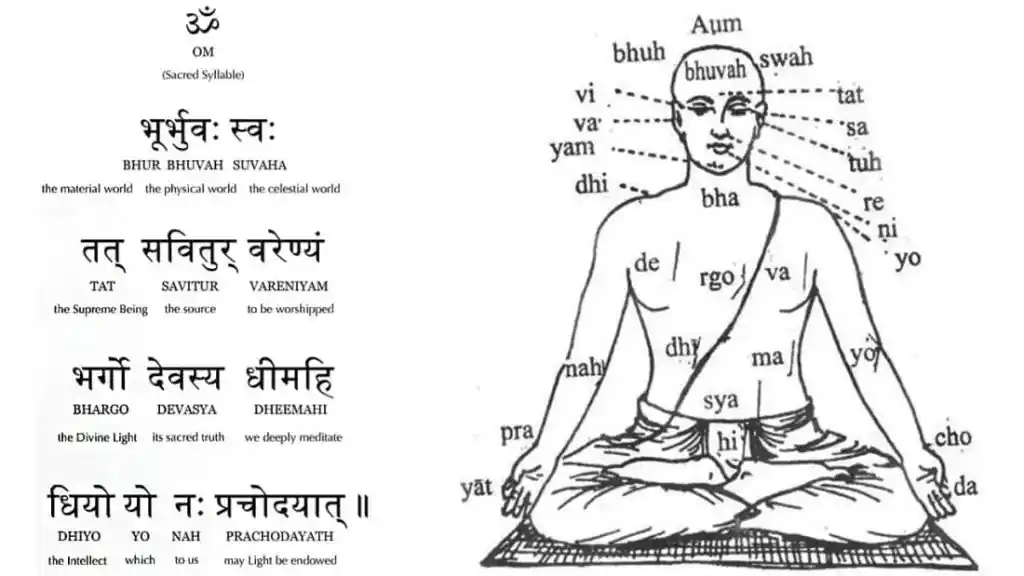
Gayatri Mantra & Surya Om bhur bhuvah swah tat savitur varenyam bhargo devasya dheemahi dhiyo yonah prachodayat (भूर्भुवः स्वः तत्सवितुर्वरेण्यं भर्गो देवस्य धीमहि धियो यो नः प्रचोदयात् ) Most of us have heard the Gayatri Mantra, and many chant it daily, but do you know its profound significance and origins? Rooted in the Rig Veda, one of the oldest Vedic texts, the Gayatri Mantra is also elaborated in the Yajur Veda. In the Bhagavad Gita (Chapter 10, Verse 35), Lord Krishna declares, “Among the Vedic meters, I am the Gayatri,” highlighting its divine glory. Chanting this mantra 108 times daily is believed to attract prosperity, lighten karmic burdens, and awaken spiritual consciousness. The Gayatri Mantra begins with Tat Savitur Varenyam, where Savitur refers to the Sun, symbolizing divine light. The mantra’s essence is a prayer: “O dear Sun, illuminate our intellect and guide our thoughts toward truth.” This is why the Sun is deeply associated with the Gayatri Mantra. In Vedic astrology, the Sun is the king of planets, considered the source of all planetary creation, as science confirms that our solar system originated from solar matter. The Sun represents the soul, earning its title as Atma Karaka (soul significator). It governs self-confidence, vitality, pride, authority, and our connection to the father and government. Without the Sun’s light, we feel sluggish—think of those gloomy, rainy days when Vitamin D deficiency leaves us low. The Sun drives day, night, and seasons, shaping life itself. Our ancestors revered this cosmic force, encouraging us to offer water to the Sun at sunrise as a gesture of gratitude and balance. By chanting the Gayatri Mantra and honoring the Sun, we align with its divine energy, paying homage to the source of life and light.  ur adipiscing elit. Ut elit tellus, luctus nec ullamcorper mattis, pulvinar dapibus leo.

Gayatri Mantra & Surya Read More »
Karma is your Shikhandi

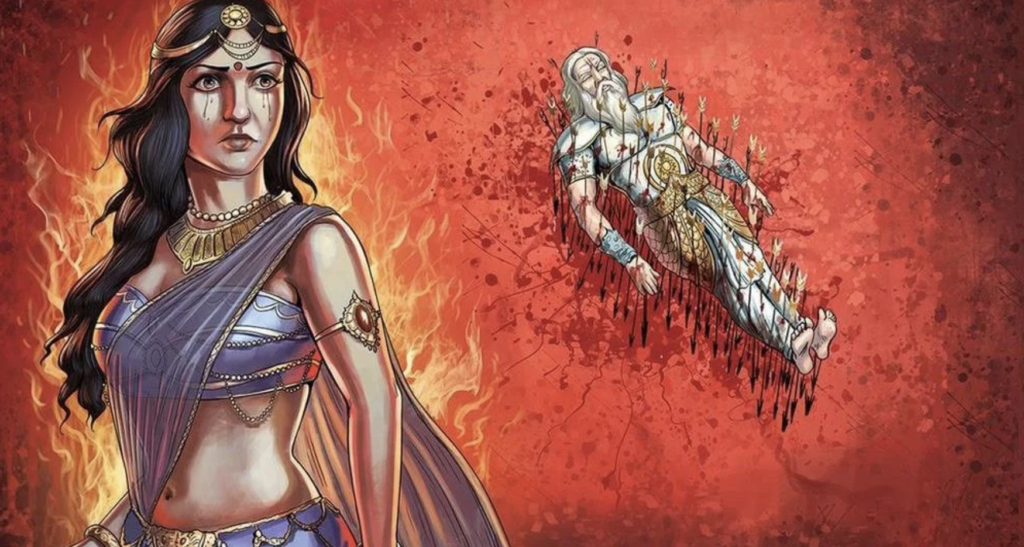
Karma is your Shikhandi If you’re an 80s kid like me, you likely have vivid memories of watching Mahabharata on Sunday mornings with family. Even if you’re not, I’m sure you’ve explored the epic saga out of curiosity at some point. In either case, you’re likely familiar with Bhishma, a central figure renowned for his unwavering loyalty to the Kuru dynasty and his formidable vows. In the Mahabharata, Shikhandi was the Draupadi’s brother and a distinct character tied to Bhishma through a complex past-life connection. In her previous life, Shikhandi was Amba, a princess abducted by Bhishma for his brother Vichitravirya. Due to his vow of celibacy, Bhishma refused to marry her and sent her away, leaving Amba humiliated and furious. She vowed to seek revenge in a future life. Reborn as Shikhandi, a warrior who was born female but later became male, he played a pivotal role in Bhishma’s demise during the Kurukshetra War. Bhishma had vowed never to fight a woman or anyone born as one. When Arjuna brought Shikhandi onto his chariot during the battle, Bhishma recognized Amba’s soul within Shikhandi and lowered his bow, honouring his vow. Seizing the opportunity, Arjuna unleashed a barrage of arrows, piercing Bhishma’s body and leading to his fall and eventual death. This is how karma works. What you experience today reflects the actions of your past—whether from this life or beyond. The good, bad, or ugly you do now shapes your future. No matter how far you run, karma will find you, delivering what you deserve. Karma is your Shikhandi. ***

Karma is your Shikhandi Read More »

Parikshit & Kali Yuga

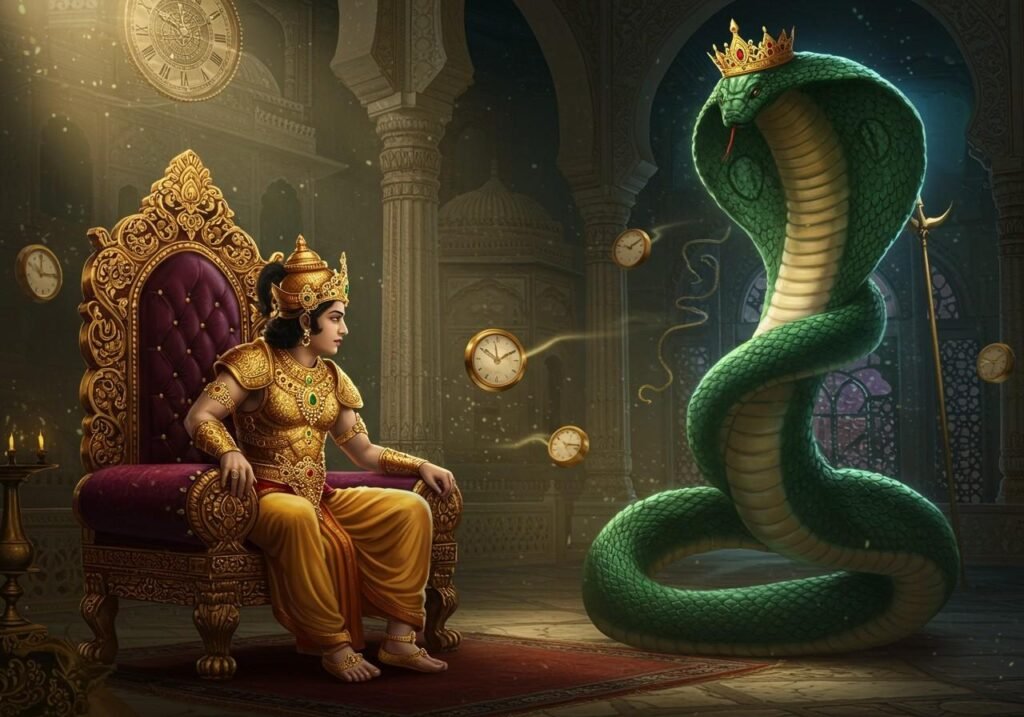
Parikshit & Kali Yuga During the ninth day of the Mahabharat war between the Pandavas and the Kauravas, the Dwapar yug had ended and Kali yuga had started. However, Kali could not spread all through the earth, because of the existence and power of Lord Krishna at that time. After departure of Lord Krishna, Kali started spreading evil influence in people’s minds . But Kali could not enter Parikshit’s kingdom as he was a kind ruler. Parikshit was the son of Abhimanyu and Uttara. After Kali’s many time requesting, Parikshit permitted him to enter his kingdom with a condition that he cannot be everywhere and hurt his people. He can only be where there is gambling, drinking of alcohol, prostitution, violence and gold. One day, Parikshit found the gold crown from his treasure, which was unjustifiably acquired from Jarasandh and he wore that out of curiosity. Money or gold acquired unjustifiably brings Kali. As Parikshit wore the crown, kali entered in mind of Parikshit. A few days later, Parikshit, still wearing the crown, went hunting for the first time. He killed many animals and got lost in the forest. Hungry and thirsty, he found a sage’s hut. The sage was meditating and didn’t notice the king. Parikshit got angry, thinking the sage was ignoring him. In a bad mood, he put a dead snake around the sage’s neck to insult him. The sage’s son, Shringi, came back and saw the snake. He was furious. He meditated and learned it was Parikshit’s doing. In anger, Shringi cursed the king to die in seven days from a snake bite. Snake king Takshak’s snakebite ultimately killed Parikshit b. Parikshit’s choice to wear the crown allowed fateful consequences to take hold, leading to his downfall and death. Our choices shape our lives and can either lift us up or bring us down!

Parikshit & Kali Yuga Read More »

Purnamadah Purnamidam

Purnamadah Purnamidam There is a profound and powerful hymn from the Ishavasya Upanishad: ॐ पूर्णमदः पूर्णमिदं पूर्णात्पूर्णमुदच्यते ।पूर्णस्य पूर्णमादाय पूर्णमेवावशिष्यते ॥ॐ शान्तिः शान्तिः शान्तिः ॥  The translation of this mantra goes like: “That is the Whole, this is the Whole; from the Whole, the Whole arises; taking away the Whole from the Whole, the Whole remains.” This mantra defines the supreme absolute and the manifested world’s reality. It reveals that true wisdom lies in realizing the ultimate fullness of all existence. I found multiple interpretations of this mantra; some relate it to the first law of thermodynamics, stating that energy cannot be created or destroyed, but only its form can be changed. Some compare it to the mathematical term infinity. Some emphasize the oneness and unity of the universe and beyond! Whenever I chant this shloka at the end of my meditation session, I sense a feeling of fulfilment and completeness. I perceive this shloka as a messenger of a higher sense of gratitude. Ultimately, all we have is everything, the Whole, Purna! Realising that “This” – the world, yourself – is already complete helps shift the mindset from a place of lack to a place of abundance. The perceived “gains” or “losses” are part of an infinite reality but are eventually illusory; the underlying wholeness remains unchanged. This understanding eliminates the fear of loss or separation, as everything ultimately dissolves into the supreme wholeness. The hymn concludes with the ultimate peace – the singular outcome derived from the Whole: Om Shanti Shanti Shanti.

Purnamadah Purnamidam Read More »

0

Subtotal